
What taking part actually involves.
Clinical trials explore new treatments and approaches to cancer care. Here, patients and families can learn what taking part involves, how referrals work and where to find support.
Three things worth knowing.
Why trials matter
Clinical trials are an essential step in improving cancer care. They help researchers understand whether new treatments, new combinations, or new ways of supporting patients are safe and effective.
Your consultant is the first step
Your consultant is the best person to discuss whether a clinical trial may be an option for you. If a suitable study is available, your consultant can refer you to the Cancer Clinical Trials Unit for assessment.
Support throughout
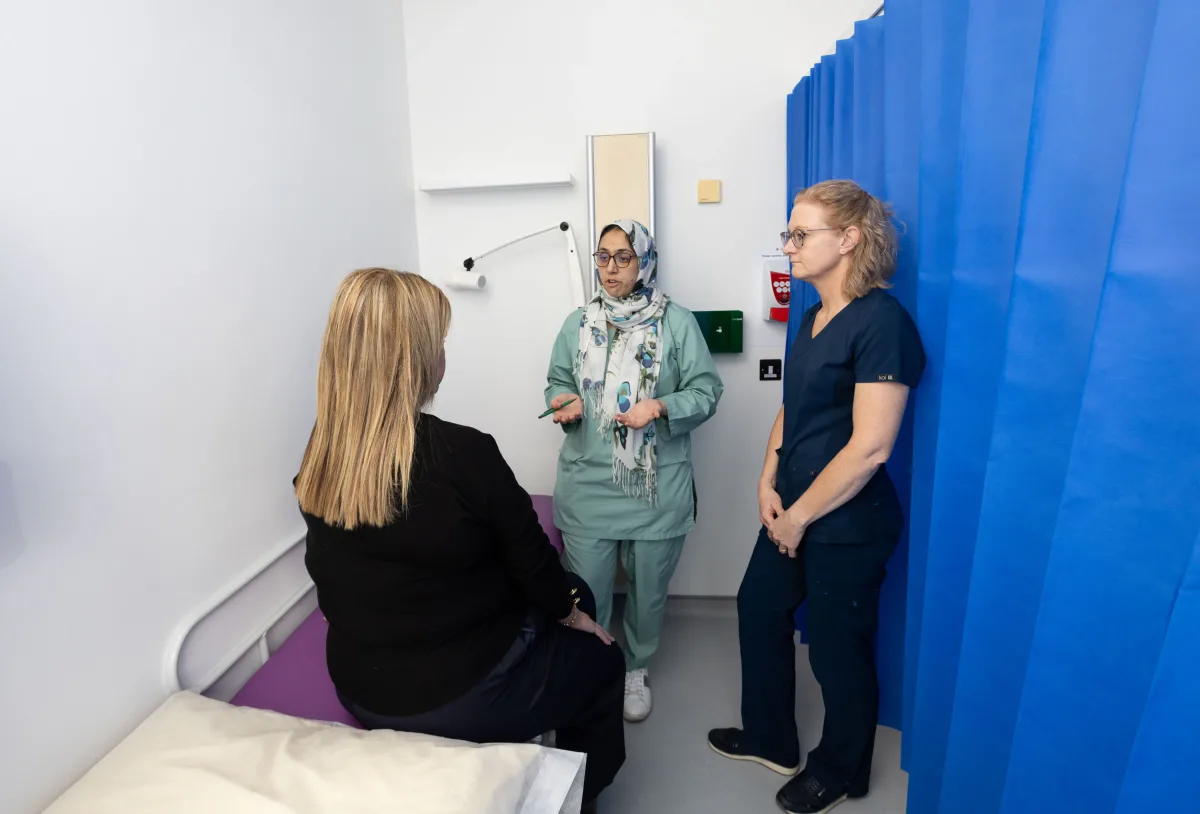
If you are referred for a clinical trial, a member of the research team will explain the study, answer your questions and support you throughout. Taking part is voluntary, and your care continues whether or not you decide to participate.
Whatever you decide, your care continues.
- Participation is always voluntary.
- Clinical trials are carefully reviewed and monitored.
- Patients can ask questions at any stage.
- Family members can be part of the conversation.

Not sure where to start?
Answer three simple questions to explore trials currently open at University Hospital Limerick. You can bring the results to your consultant to discuss whether a trial may be suitable for you.
What happens when you’re referred?
Every clinical trial is different, but most follow a similar pathway from referral and screening through to taking part and follow-up. At each stage, the research team will explain what happens, answer your questions and support you through the process.
-
01
Referral
Your consultant identifies a clinical trial that may be suitable for your diagnosis and treatment plan and refers you to the Cancer Clinical Trials Unit.
- Who you may meet
- Your treating consultant
- Worth asking
- “Could a clinical trial be an option for me?”
-
02
Informed consent
If the trial may be suitable for you, the research team will explain the study in detail, including what taking part involves and the possible benefits and risks. You will have an opportunity to ask questions before deciding whether you would like to take part.
- Who you may meet
- A research nurse and the doctor leading the study
- Worth asking
- “What are the possible benefits and risks, and what are my other treatment options?”
-
03
Screening
The research team reviews the trial with you and carries out any tests or assessments needed to determine whether the study is suitable for you.
- Who you may meet
- A research nurse and members of your clinical team
- Worth asking
- “What tests or assessments will I need?”
-
04
Taking part
If you decide to take part and meet the study requirements, the research team will explain your treatment or study plan, appointments and any additional tests or assessments involved.
- Who you may meet
- Your research and clinical care teams
- Worth asking
- “How will taking part affect my treatment and usual appointments?”
-
05
Follow-up
Many studies include follow-up after treatment or study visits have finished. This helps the research team understand how you are doing and collect information needed for the study. Your team will explain what follow-up involves for your particular trial.
- Who you may meet
- Your research and clinical care teams
- Worth asking
- “What happens when my study treatment or visits finish?”
The questions people ask first.
Clear answers to common questions about clinical trials and what taking part involves.
What is a clinical trial?
A clinical trial is a research study involving patients that aims to find better ways to prevent, diagnose, treat or manage cancer. Clinical trials help researchers determine whether new treatments are safe and effective.
Clinical trials can involve testing:
- New medicines or treatment combinations
- New ways of delivering radiotherapy or surgery
- Medical devices and supportive care interventions
- New approaches to cancer diagnosis and monitoring
- Blood and tissue samples to better understand cancer
Why are clinical trials important?
Many of today's standard cancer treatments were developed through clinical trials. By taking part in research, patients help improve treatment options and care for future generations. They also provide some patients with access to innovative treatments that may not otherwise be available.
Are clinical trials safe?
Yes. Before any clinical trial opens, it must undergo rigorous scientific, ethical and regulatory review. Participant safety is continuously monitored throughout the study.
Who can take part in a clinical trial?
Clinical trials are open to people with specific types of cancer. Each study has its own eligibility criteria, and the research team reviews these criteria carefully to determine whether a study may be suitable for you.
Cancer trials closer to home.

Questions about a trial?
Your consultant is the best person to discuss whether a clinical trial may be right for you. If a suitable study is available, they can refer you to the Cancer Clinical Trials Unit for assessment.
- Phone
- 061 485159
- [email protected]
- Hours
- Monday–Friday, 8am–5pm